Organization Setup
Establish the organization’s identity, terminology, roles and working structure.
Mission Intelligence is a secure organizational platform in development for teams that have outgrown scattered files, missed follow-up and generic contact software. Phase 1 brings the operational foundation into one controlled environment—so people can work with clearer context, continuity and responsibility.
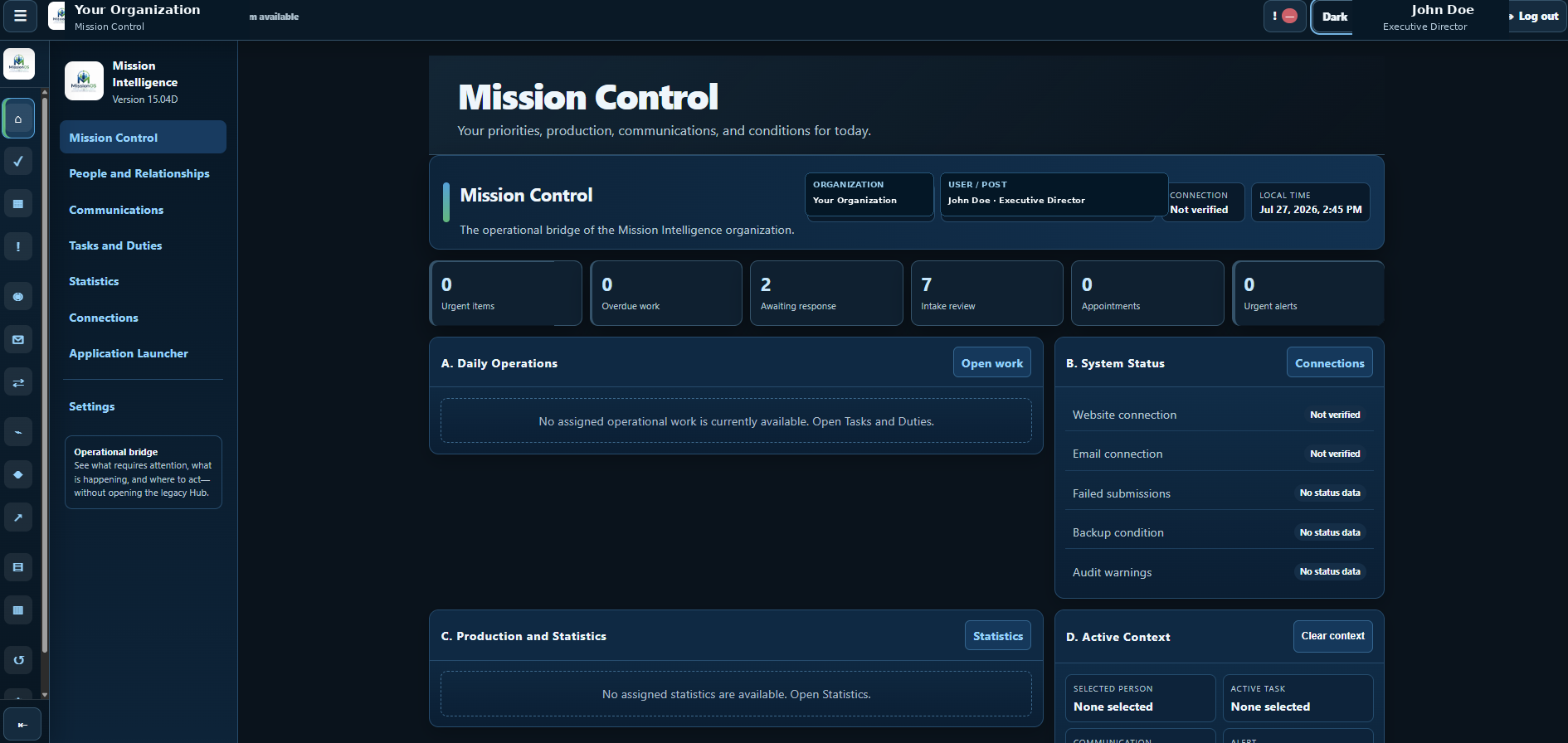
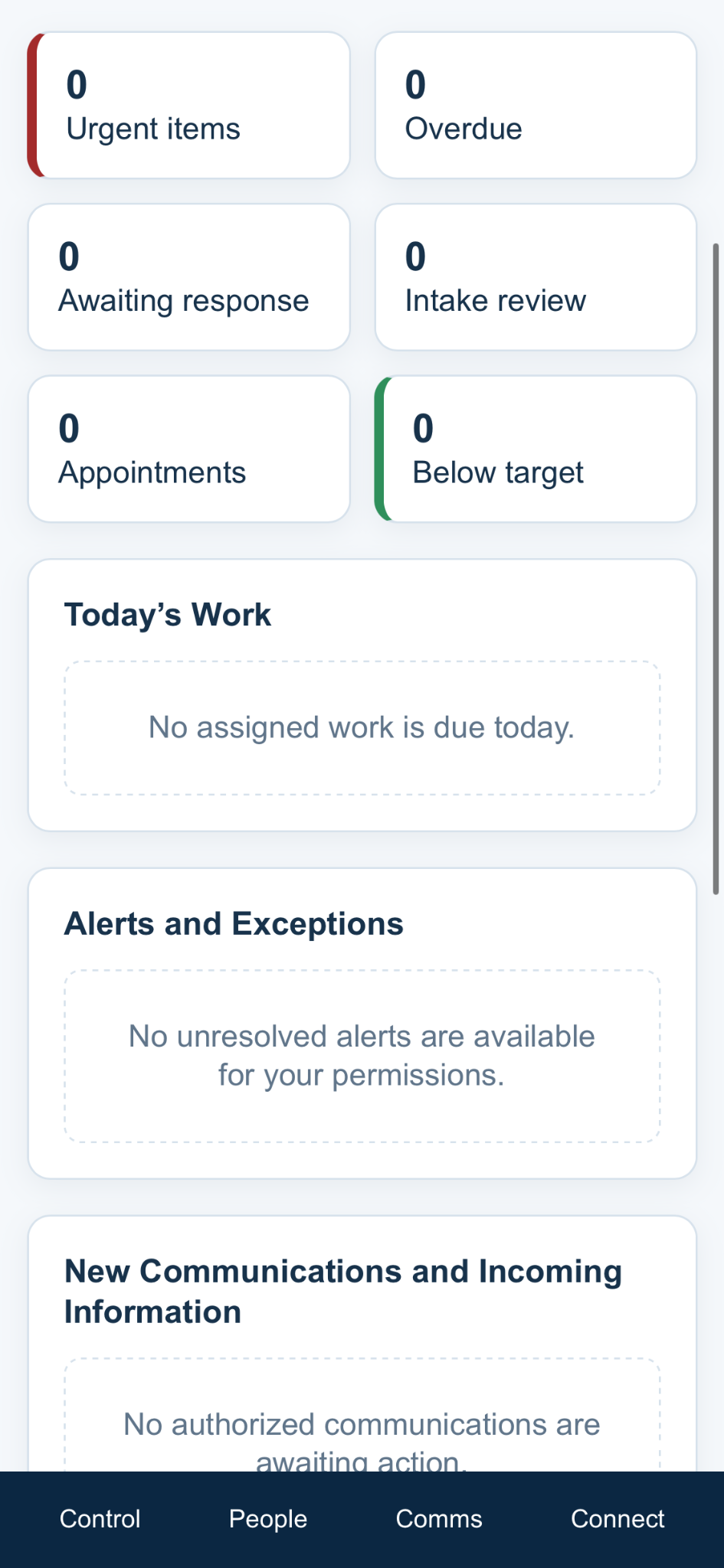
Most CRMs are designed to manage prospects and transactions. Mission Intelligence begins with people, then connects them to the real work of the organization. Phase 1 establishes that secure foundation without forcing every organization into the same generic model.
Establish the organization’s identity, terminology, roles and working structure.
Maintain complete person records with the history and context authorized staff need.
Make assigned work, ownership and follow-up easier to see and continue.
Keep important notes and communication history connected to the work they concern.
Control who can view or change organizational information through defined permissions.
Create a stable base that can expand as the organization and the platform develop.
Information is often spread across personal inboxes, notebooks, spreadsheets, messaging apps and individual staff members’ memories. The issue is not simply inconvenience. The organization loses continuity, accountability and the ability to act with complete context.
Phase 1 is not intended to reveal or deliver every future capability. Its job is more important: establish the permanent core correctly so the organization’s information does not have to be repeatedly moved, rebuilt or compromised as the platform grows.
When records, responsibility and history become reliable, an organization can begin to coordinate faster, reduce duplication and make better-informed decisions. Mission Intelligence is being built toward that larger possibility—but the public roadmap will unfold only as each foundation is proven.
The first release is deliberately focused. The goal is not to announce every possibility. The goal is to create a dependable working foundation that people can understand, trust and actually use.
The system should help staff understand and serve people better, not turn relationships into transactions.
Important information and next actions should be understandable without technical expertise.
The organization should be able to reflect its own structure and terminology without rebuilding the product.
Access, permissions and organizational separation are part of the product foundation, not an afterthought.
Important changes and responsibilities should remain visible and traceable to authorized users.
Mission Intelligence will earn the right to grow by making the current foundation genuinely dependable.
Phase 1 is practical by design. Its value comes from improving the quality, continuity and control of the work already being done.
Authorized users can work from shared organizational information instead of scattered private versions.
People, responsibilities and unresolved actions remain easier to find and continue.
Critical history is less likely to disappear when someone changes roles or leaves.
The organization can better understand what changed, who owns the work and what needs attention.
Mission Intelligence is being designed for organizations that need more than a generic customer database and whose work cannot be reduced to a conventional sales process.
Support outreach, people, services, staff continuity and organizational coordination.
Connect supporters, volunteers, programs, communications and internal responsibility.
Organize local initiatives, relationships, events and the work required to sustain them.
Maintain people, responsibilities, programs and important institutional context.
Improve continuity, control and coordination where dependable action matters most.
Phase 1 is under active development. Early-access conversations will open as the operational foundation reaches the appropriate level of readiness.